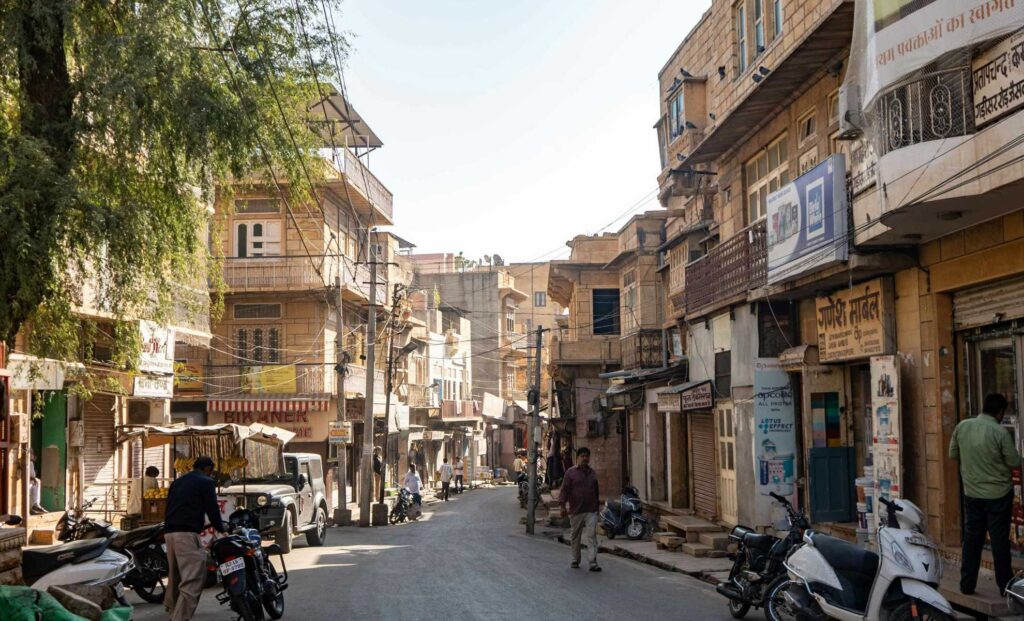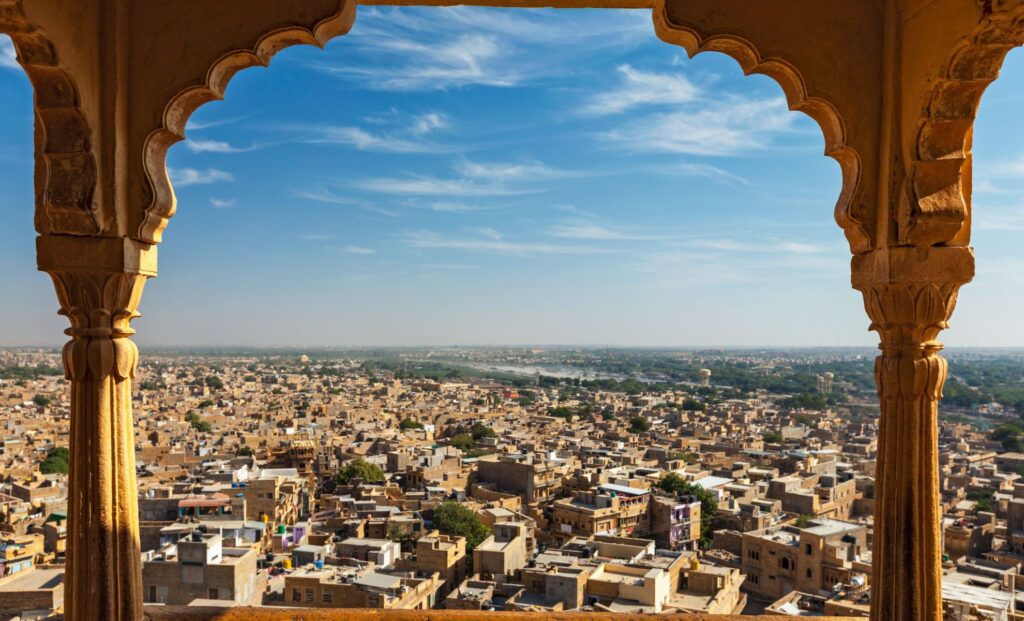
Quick Answer: This Jaisalmer travel guide covers everything you need to plan your trip to the Golden City of Rajasthan. Jaisalmer is famous for its UNESCO-listed Golden Fort, ornate havelis, Thar Desert safaris, camel desert camps, and centuries-old artisan crafts. The best time to visit Jaisalmer is October to March. Most travelers need 2 to 3 days for the essential sightseeing, and 4 to 5 days for a proper heritage and craft experience. everyday desert life.
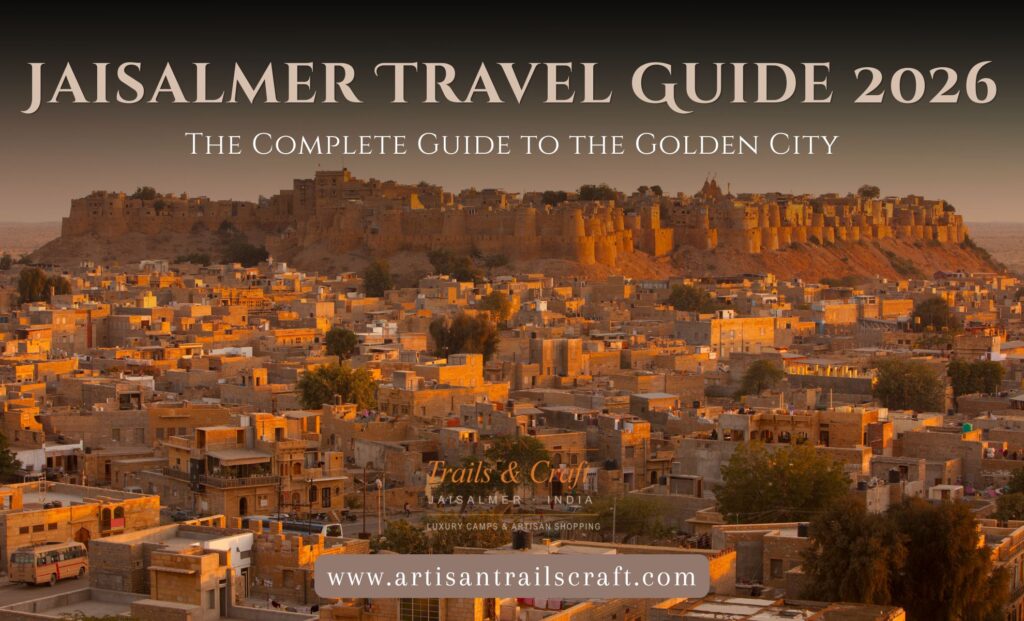
What Is Jaisalmer and Why Should You Visit?
Jaisalmer, often called the Golden City of Rajasthan, is one of India’s most visually distinct destinations and one of the most rewarding stops on any Rajasthan tourism itinerary. Built almost entirely from yellow Jurassic limestone (locally called dune stone), the city glows amber at sunrise and gold at sunset. It sits at the edge of the Thar Desert, roughly 575 km west of Jaipur, and has been a living trade hub since its founding in 1156 CE by Rawal Jaisal of the Bhati Rajput clan.
What makes this Jaisalmer travel guide different from a standard destination overview is the focus on what makes the city genuinely unique. Jaisalmer Fort is still inhabited, with around 3,000 people living inside its walls today, making it one of the few living forts in the world. Temples, havelis, restaurants, and craft shops operate within its medieval ramparts, giving visitors an immersive experience that no museum can replicate.
For travelers interested in artisan heritage and traditional crafts, Jaisalmer is exceptional. The city’s craftspeople have practiced embroidery, block printing, leather work, silver jewelry making, and stone carving for generations, with many techniques passed down within families for centuries.
Jaisalmer Travel Guide: Key Facts at a Glance
| Detail | Information |
|---|---|
| Location | Jaisalmer District, Rajasthan, India |
| Nearest Airport | Jaisalmer Airport (JSA), domestic flights from Delhi, Jaipur, Mumbai |
| Nearest Rail Junction | Jaisalmer Railway Station, connected to Delhi, Jaipur, Jodhpur, Mumbai |
| Best Time to Visit Jaisalmer | October to March (peak season: November to February) |
| Jaisalmer Weather to Avoid | April to June (temperatures reach 45 to 48°C) |
| Recommended Stay | 2 to 3 days minimum; 4 to 5 days for a craft-focused heritage trip |
| Language | Hindi, Rajasthani (Marwari); English spoken at most tourist areas |
| Currency | Indian Rupee (INR) |
| UNESCO Heritage Status | Jaisalmer Fort, part of Hill Forts of Rajasthan (inscribed 2013) |
How to Reach Jaisalmer
Planning how to get there is one of the first things this Jaisalmer travel guide needs to address, because the city is a long way from most major Indian cities and each route offers a very different experience.
By Air
Jaisalmer Airport (IATA: JSA) operates domestic flights from Delhi, Jaipur, and Mumbai. Flying is the fastest option if you are coming from a distant city and short on time. It is worth pre-booking a taxi or auto-rickshaw from the airport since the city center is approximately 5 to 7 km away.
By Train
Jaisalmer Railway Station connects to Delhi (via the Jaisalmer Express, around 17 hours), Jodhpur (5 to 6 hours), Jaipur (10 to 11 hours), and Mumbai (21 or more hours). The Jaisalmer to Jodhpur train route is particularly popular for travelers doing a Rajasthan circuit. The overnight train from Delhi or Jaipur arrives in the morning, giving you a full first day for sightseeing.
By Road
Jaisalmer is well-connected by National Highway 11 from Jodhpur, which is about 285 km and takes roughly 4.5 hours by car. State buses and private coaches run regularly from Jodhpur, Jaipur, and Bikaner. Many travelers combining multiple Rajasthan tourism destinations prefer renting a car with a driver for the flexibility it offers on routes between cities.
Best Time to Visit Jaisalmer: Month by Month
Jaisalmer weather is one of the most important things to understand before booking. The city sits in the middle of the Thar Desert, which means extreme heat in summer and genuinely cold winter nights despite warm days.
October to November
This is an ideal window for Jaisalmer sightseeing. Post-monsoon clarity brings comfortable daytime temperatures of 20 to 30°C, and the city is not yet at peak tourist capacity. It is a good balance of pleasant weather and manageable crowds.
December to January
These are the most popular months for visiting Jaisalmer and for good reason. Days are warm (18 to 25°C) and evenings drop to 7 to 12°C. Carry a jacket or shawl if you are planning evening activities or an overnight desert camp stay. Book accommodation well in advance during this period.
February
February is festival month. The Jaisalmer Desert Festival (Maru Mahotsav) is held during the full moon near Sam Dunes. Camel racing, folk performances, turban-tying competitions, and the Mr. Desert contest make this one of Rajasthan tourism’s most vibrant annual events. If you can plan your visit around it, it is worth the effort.
March
March offers pleasant days and slightly warmer evenings. It is a good choice for avoiding peak-season crowds while still enjoying comfortable weather for outdoor Jaisalmer sightseeing.
April to September
Summer Jaisalmer weather is extreme, regularly reaching 48°C. The monsoon from July to September brings limited rainfall and high humidity. Unless you have a specific reason to visit, these months are best skipped entirely.
Top Places to Visit in Jaisalmer
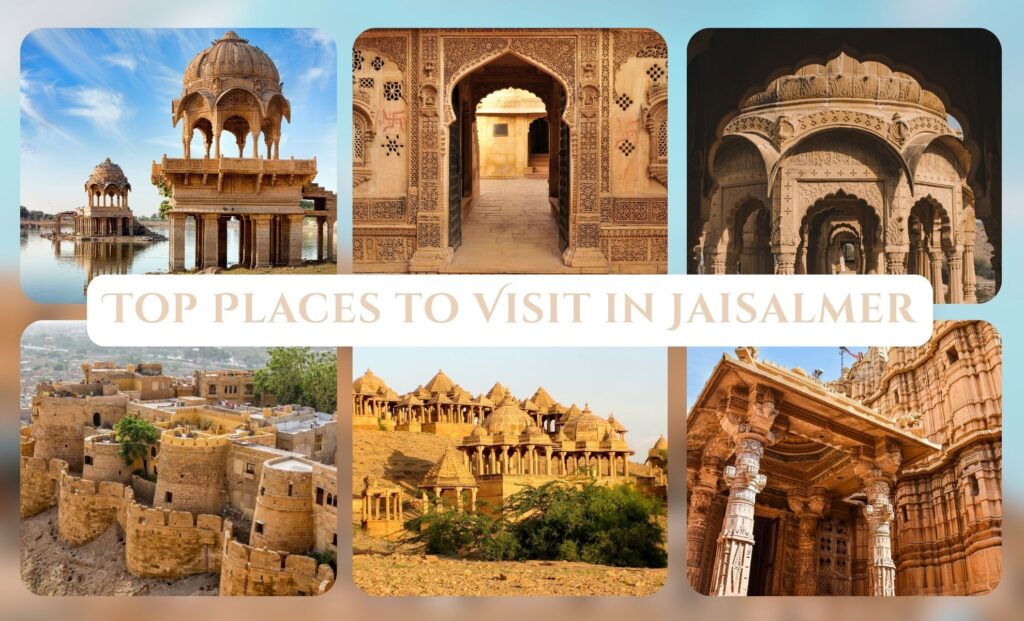
No Jaisalmer travel guide is complete without a thorough look at the city’s sightseeing highlights. The places below are listed in order of importance, not just by popularity.
1. Jaisalmer Fort (Sonar Quila)
The single most important heritage site in Jaisalmer.
Jaisalmer Fort, also called Sonar Quila or Golden Fort, was built in 1156 CE on Trikuta Hill, rising 76 meters above the desert plain. It is part of the UNESCO World Heritage Site “Hill Forts of Rajasthan” (inscribed 2013) and covers approximately 4.5 km of outer walls with 99 bastions. It is the centrepiece of any Jaisalmer itinerary.
Unlike most Indian forts that are now empty monuments, roughly 3,000 residents still live inside, running homes, temples, hotels, and shops. Inside the fort you will find the Raj Mahal (Royal Palace), now partially a museum with stone carvings, mirror work, and artifacts. The Jain Temples, built between the 12th and 16th centuries, feature extraordinarily detailed stone filigree work considered among the finest Jain craftsmanship in Rajasthan. The Laxminath Temple is an active Hindu temple still central to residents’ daily worship. Walking the fort ramparts gives panoramic views over the desert city and the Thar Desert beyond, and the narrow artisan lanes are lined with craftspeople selling hand-embroidered textiles, carved stone items, leather goods, silver jewelry, and Rajasthani puppets.
Visiting tip: Enter early in the morning, before 9 AM, to experience the fort in quiet golden light before tour groups arrive. Sunset from the ramparts is exceptional.
Entry: There is no entry fee for the fort itself, though the palace museum charges a separate fee.
2. Patwon Ki Haveli
The most architecturally elaborate haveli complex in Jaisalmer.
Patwon Ki Haveli is a cluster of five interconnected mansions built between 1800 and 1860 by Guman Chand Patwa, a wealthy brocade and opium merchant, and his five sons. The havelis showcase jharokha (projecting balconies) and jali (stone lattice screens) carved with almost impossible delicacy, the sandstone worked until it resembles lace. It is one of the finest examples of Rajasthani heritage architecture anywhere in the state.
The craftsmanship here directly influenced the decorative textile and craft traditions still practiced in Jaisalmer today. Some sections are government-managed museums while others remain in private use.
Visiting tip: Look closely at the carved balconies. No two jali panels use the same pattern, and this same tradition of non-repeating motifs continues in Jaisalmer’s embroidery and block printing heritage.
3. Salim Singh Ki Haveli
Built around 1815 by Salim Singh, the then-Prime Minister of Jaisalmer, this haveli is immediately recognizable for its distinctive peacock-shaped top floor, which cantilevers dramatically over the street below. The multi-arched rooftop with 38 balconies in an arc is one of the most photographed architectural details in all of Rajasthan.
The haveli is still partially inhabited by descendants of the Salim Singh family, which gives it a lived-in quality that sets it apart from purely museum-style properties.
4. Nathmal Ki Haveli
Constructed in the late 19th century for Diwan Mohta Nathmal, this haveli has a remarkable origin story. The left and right halves were built by two brothers simultaneously, working independently, which resulted in facades that are nearly identical but subtly different from each other. Look carefully and you will spot the differences.
The detailed elephant carvings at the entrance and the intricate stone work throughout make it a must-visit on any Jaisalmer sightseeing itinerary for those interested in traditional Rajasthani craft and architecture.
5. Gadisar Lake
Built in 1367 CE by Maharawal Gadsi Singh as the city’s primary water reservoir, Gadisar Lake sustained Jaisalmer through centuries of desert life. Today it is a peaceful escape from the main streets, surrounded by temples, ghats, and the ornate Tilon Ki Pol gateway.
The lake attracts migratory birds during winter months (October to February), making it a pleasant spot for early morning walks. Boat rides are available. The architecture around the lake, including multiple small shrines and carved stone pavilions, is less visited than the fort and havelis but equally rich as a heritage site.
6. Sam Sand Dunes
Located 42 km west of Jaisalmer, Sam Sand Dunes is the closest and most accessible stretch of classic Thar Desert landscape near the city. The dunes rise to approximately 30 meters and are among the highest in Rajasthan. A desert safari here is one of the most popular things to do in Jaisalmer.
At Sam Dunes you can do camel safaris ranging from a 30-minute ride to a full-day desert safari trek, stay overnight in luxury or traditional tented desert camps, watch the sunset and sunrise when the light on the sand dunes is extraordinary, enjoy folk music and cultural performances at evening camps, and cover more ground with jeep safaris across the Thar Desert.
Visiting tip: Book overnight desert camps well in advance during peak season (December to February). For a less crowded experience, ask your hotel about the dunes at Khuri, approximately 40 km southwest, which are quieter and considerably less commercialized.
7. Kuldhara Village
One of the most atmospheric and unusual places to visit in Jaisalmer, Kuldhara is a village that was abandoned overnight in 1825 by the entire Paliwal Brahmin community, reportedly to escape persecution by the then-Prime Minister Salim Singh. Around 1,500 people vanished in a single night, leaving behind hundreds of intact stone homes.
The Archaeological Survey of India maintains the site today. Walking through the empty sandstone lanes gives a haunting, vivid sense of 19th-century desert village life. Kuldhara is located approximately 18 km from Jaisalmer and is easy to combine with a Sam Dunes desert safari day.
8. Bada Bagh (Royal Cenotaphs)
Located 6 km north of the city, Bada Bagh is a garden complex housing the royal cenotaphs (chhatris) of the Jaisalmer maharajas, each topped with distinctive domed canopies and carved on all sides with scenes from the ruler’s life. The oldest date to the 16th century.
The setting of royal heritage monuments against a backdrop of open desert sky is particularly striking at golden hour. Photography here is exceptional in early morning or late afternoon light and it is a quieter alternative to the busier Jaisalmer sightseeing spots.
Jaisalmer’s Artisan Craft Heritage: What Makes This City Special

Any serious Jaisalmer travel guide needs to go beyond the fort and havelis and spend time on the craft traditions, because that is where the city’s deepest identity lives. Jaisalmer’s crafts are inseparable from its history as a Silk Road trading hub. Merchants, artisans, and craftspeople from across Central Asia and India settled here over centuries, layering techniques and aesthetics that remain distinctive today.
Embroidery and Textile Crafts
Jaisalmer is renowned for mirror-work embroidery (shisha), practiced primarily by communities in the surrounding villages. Geometric patterns in bold colors, deep red, indigo, saffron, and green, are stitched onto fabric using tiny mirrored pieces that catch and scatter light. This craft appears on everything from dupattas and bags to home furnishings and is one of the most iconic things to buy in Jaisalmer.
Where to find it: The lanes inside Jaisalmer Fort and Sadar Bazaar are lined with shops selling embroidery work. For authentic handmade pieces, look for items with irregular, hand-done stitching rather than machine precision.
Stone Carving
The same yellow sandstone that builds Jaisalmer’s havelis and fort is carved by local artisans into decorative panels, statues, and functional objects. Master stone carvers whose families have practiced this craft for generations can be seen at work in workshops near the fort. Small carved items make excellent and genuinely local souvenirs.
Leather Craft (Mojari and Jutti)
Jaisalmer is known for hand-stitched mojari (traditional Rajasthani shoes) in bold colors and intricate patterns. The leather work here differs from Jodhpur’s in its use of finer embroidery and more elaborate toe-work. Several workshops near the fort entrance allow visitors to watch craftspeople at work, which is itself one of the best things to do in Jaisalmer for craft travelers.
Silver Jewelry
The city has a long tradition of silver jewelry making, producing pieces in tribal and royal Rajasthani styles. Look for oxidized silver with inlaid semi-precious stones, particularly pieces featuring the kundan and meenakari techniques.
Block Printing and Bandhani
While Bagru and Sanganer near Jaipur are the primary centers for block printing in Rajasthan tourism circuits, Jaisalmer’s market carries excellent examples of both block-printed and bandhani (tie-dye) textiles from across western Rajasthan. Some workshops offer short demonstrations that are well worth the time.
How to Buy Authentically
The best approach is to buy directly from artisans whenever possible. Craftspeople selling their own work in the fort lanes are usually happy to explain their techniques and family history, which is itself part of the Jaisalmer experience. Look for slight irregularities that signal genuine handwork rather than factory production. If you are unsure about pricing or quality, the Rajasthan Government Emporium offers fixed prices and reliable quality assurance.
Where to Eat in Jaisalmer: Traditional Rajasthani Food Guide
Food is a significant part of any Jaisalmer travel guide worth its salt. Rajasthani cuisine developed in a desert climate where fresh vegetables were scarce and preservation was essential, which is why the dishes are so distinctive.
Must-Try Rajasthani Dishes
Dal Baati Churma is the definitive dish of Rajasthan. Hard wheat rolls (baatis) are baked in a clay oven or open fire, then served with a five-lentil dal and sweetened crushed wheat (churma). Rich, filling, and deeply satisfying, it is available at most traditional restaurants and dhabas throughout Jaisalmer.
Ker Sangri is a unique desert vegetable preparation made from ker berries and sangri beans, both native to the Thar Desert. It is tangy, spicy, and unlike anything found outside Rajasthan. Its presence on a menu is a reliable indicator of genuine local Rajasthani cooking.
Laal Maas is a fiery mutton curry made with mathania red chilies, a variety grown near Jodhpur. It is genuinely spicy, so ask about heat level if that matters to you.
Gatte ki Sabzi is made from chickpea flour dumplings in a tangy yogurt-based gravy. A vegetarian staple of Rajasthani home cooking, it is comfort food in the truest sense.
Kadhi Kachori is a popular breakfast in Jaisalmer. Crispy, puffed kachoris are served with spiced chickpea gravy and are best eaten fresh from street stalls in the morning.
Malai Ghevar is a disc-shaped sweet made from fried batter soaked in sugar syrup and topped with cream or rabri. Look for it at sweet shops throughout the city.
Where to Eat
Inside Jaisalmer Fort there are multiple rooftop restaurants with fort and desert views. Quality varies, so look for places with menus that emphasize local Rajasthani dishes rather than a generic tourist menu. Around Sadar Bazaar you will find street food stalls, sweet shops, and local eateries frequented by residents, which is usually a reliable quality signal. At desert camps in Sam Dunes, most overnight camps include evening dinners paired with folk performances, and the food is generally good.
Shopping in Jaisalmer: What to Buy and Where
| Item | What to Look For | Where to Buy |
|---|---|---|
| Embroidered textiles | Hand-done shisha work, irregular stitching | Fort lanes, Sadar Bazaar |
| Mojari (traditional shoes) | Hand-stitched, not glued seams | Fort entrance area, Sadar Bazaar |
| Stone carvings | Carved by local artisans, not factory-made | Fort lanes, craft workshops |
| Silver jewelry | Oxidized silver, hand-worked | Sadar Bazaar jewelry shops |
| Block-printed fabric | Hand-block print, not screen print | Sadar Bazaar, fabric shops |
| Rajasthani puppets | Hand-painted, stitched costumes | Fort, souvenir shops |
| Camel leather goods | Bags, wallets, belts in local leather | Multiple shops near the fort |
Shopping Tips
Bargaining is expected at market stalls and small shops. A reasonable starting point is 40 to 50 percent of the asking price, then negotiate from there in a friendly tone. If you prefer not to negotiate, look for fixed-price shops, which are clearly signed. The morning hours between 9 and 11 AM are good before the heat peaks, and evenings from 5 to 8 PM when the Sadar Bazaar is at its liveliest are particularly enjoyable for shopping.
Suggested Jaisalmer Itineraries
One of the most common questions this Jaisalmer travel guide gets asked is how many days are enough. The answer depends on your interests, but here are four tried-and-tested Jaisalmer itinerary options.
One Day in Jaisalmer: Essential Highlights
Start your morning with Jaisalmer Fort, spending 3 to 4 hours covering the Raj Mahal Palace Museum, the Jain Temples, and the fort ramparts. From there, walk to Patwon Ki Haveli for about an hour to take in the carved galleries. In the afternoon, visit Salim Singh Ki Haveli and Nathmal Ki Haveli (about 45 minutes combined), then spend an hour at Gadisar Lake. Use the late afternoon for Sadar Bazaar shopping and street food, and in the evening drive 30 minutes to Bada Bagh or Sam Dunes for a desert sunset.
Two Days in Jaisalmer: City Plus Desert
Follow the one-day Jaisalmer itinerary above for Day 1. On Day 2, visit Kuldhara abandoned village in the morning (about 1.5 hours), return to the city for artisan workshop visits, and then drive to Sam Dunes in the afternoon for a sunset camel safari and an overnight desert camp with folk music and dinner. This is the most popular two-day Jaisalmer itinerary for first-time visitors.
Three Days in Jaisalmer: Full Cultural Immersion
On Day 1, go deep into Jaisalmer Fort. Return at different times, both morning and golden hour, to see how the Jaisalmer weather and light transform the golden sandstone. Day 2 covers all three major havelis, Gadisar Lake, Bada Bagh, Sadar Bazaar, and artisan craft exploration. Day 3 is for Kuldhara, a desert safari at Sam Dunes, an overnight desert camp, and a sunrise over the sand dunes the following morning.
Four to Five Days: For Craft and Heritage Travelers
With more time, this Jaisalmer travel guide recommends adding visits to Lodurva (ancient Jain temples, 15 km from the city), Amar Sagar (garden palace and lake, 7 km), and the surrounding artisan villages where embroidery communities still practice traditional crafts in domestic settings. Some local guides offer craft village tours that include home visits and demonstrations, which is the most direct way to understand the living tradition behind the items sold in Jaisalmer’s bazaars.
Practical Travel Tips for Jaisalmer
Getting Around
The old city and all major havelis are within comfortable walking distance of each other, so your feet are the best transport inside the fort and city core. For Sam Dunes and outlying Jaisalmer sightseeing spots, hire a taxi or auto-rickshaw and agree on the price before you leave. Bicycles and motorbikes are available for rent near the fort and work well for visiting Bada Bagh and Gadisar Lake independently.
Jaisalmer Weather and Health Tips
Jaisalmer’s dry desert air dehydrates visitors quickly, even in winter, so carry water and drink regularly throughout the day. The desert sun is strong even in the cooler months, so sunscreen, sunglasses, and a hat or dupatta are worth packing. Wear comfortable closed-toe walking shoes since the fort paths are uneven stone. For food, stick to freshly cooked items and avoid pre-cut fruit from street stalls unless it is being prepared in front of you. Carry any personal medications you need; a pharmacy is available in Sadar Bazaar and the nearest well-equipped hospital is in Jodhpur.
Cultural Etiquette
Dress modestly when entering temples and the fort area, with shoulders and knees covered. Remove shoes before entering temples and many traditional homes, and ask permission before photographing residents, craftspeople, or women. When bargaining, a friendly and respectful tone will always produce better results than aggressive negotiation, and it also makes for better interactions with the people you meet.
Connectivity
Most hotels, restaurants, and camps offer Wi-Fi. Mobile connectivity (4G and 5G) is reliable in the city but can be patchy at Sam Dunes and more remote Thar Desert areas. It is worth downloading offline maps before heading out of the city.
Frequently Asked Questions About Jaisalmer
Is Jaisalmer worth visiting in 2026?
Yes, without reservation. Jaisalmer tourism offers a combination of living history (an inhabited medieval fort), extraordinary artisan craft traditions, Thar Desert landscape, and Rajasthani culture that is genuinely unlike any other city in India. It is not merely a sightseeing destination. It is an experience of a place and way of life that has endured for nearly 900 years. Every good Jaisalmer travel guide will tell you the same.
How many days do you need for a Jaisalmer itinerary?
Two full days cover the essential highlights of any Jaisalmer itinerary. Three days allows a relaxed pace with time for desert safari camps and craft exploration. Four to five days is ideal for travelers with a specific interest in artisan heritage, photography, or detailed architectural study.
Is Jaisalmer safe for solo travelers and women travelers?
Jaisalmer is generally considered safe for tourists, including solo travelers and women. Standard precautions apply: use registered taxis, stay in well-reviewed accommodations, and avoid isolated areas after dark. The tourist area around the fort is well-monitored.
What is the Jaisalmer Desert Festival?
The Jaisalmer Desert Festival (Maru Mahotsav) is an annual cultural festival held in February during the full moon near Sam Dunes. It features camel races, folk music and dance, turban-tying and mustache competitions, fire dancing, and the famous Mr. Desert contest. It is organized by the Rajasthan Tourism Department and draws visitors from across India and internationally. It is one of the highlights of the Rajasthan tourism calendar.
What is Jaisalmer Fort famous for?
Jaisalmer Fort is famous for being one of the largest fully preserved desert heritage sites in the world and for its status as a UNESCO World Heritage Site (2013). The fact that approximately 3,000 people still live inside makes it genuinely unusual. Its Jain temples with detailed stone carving and its golden sandstone construction that glows at sunrise and sunset are among the most memorable sights in all of Rajasthan tourism.
How far is Jaisalmer from Jodhpur?
Approximately 285 km by road, which takes roughly 4.5 hours by car. The Jaisalmer to Jodhpur route is one of the most commonly traveled in Rajasthan tourism circuits. The overnight train is a popular and comfortable option for making that journey.
What is the best time to visit Jaisalmer?
The best time to visit Jaisalmer is from October to March when Jaisalmer weather is most comfortable for outdoor sightseeing and desert safaris. December and January are peak season, and February is best for the Jaisalmer Desert Festival. Avoid April to June when temperatures regularly exceed 45°C.
Can you visit Jaisalmer in summer?
Jaisalmer weather from April to June reaches 45 to 48°C. Most travelers avoid summer unless they have a specific purpose. If you do visit in summer, limit outdoor Jaisalmer sightseeing to early morning and evening, stay in well air-conditioned accommodation, and hydrate constantly.
What are the best things to do in Jaisalmer?
The top things to do in Jaisalmer include exploring Jaisalmer Fort and its Jain Temples, visiting the historic havelis (Patwon Ki Haveli, Salim Singh Ki Haveli, and Nathmal Ki Haveli), doing a camel safari or overnight desert camp at Sam Sand Dunes, visiting Gadisar Lake, exploring Kuldhara abandoned village, shopping for traditional crafts in Sadar Bazaar, and watching the sunset from Bada Bagh.
What makes Jaisalmer’s crafts unique?
Jaisalmer’s craft traditions, particularly mirror-work embroidery, stone carving, and mojari leather work, developed over centuries within specific artisan communities. Many craftspeople trace their practice back multiple generations. The relative isolation of the Thar Desert location meant these techniques evolved distinctively without the homogenizing influence of larger commercial centers, which gives Jaisalmer crafts a visual language that is specifically and recognizably Jaisalmeri.
Why Artisan Trails & Crafts Recommends Jaisalmer
At Artisan Trails & Crafts, we focus on destinations where traditional craft is not just sold as a tourist product but practiced as a living tradition. Jaisalmer qualifies on every measure, which is why we consider it one of the essential stops on any Rajasthan tourism itinerary for craft-conscious travelers.
The craftspeople working in the lanes of Jaisalmer Fort, in the workshops around Sadar Bazaar, and in surrounding villages are heirs to techniques that shaped the aesthetics of an entire region. The jali screens of Patwon Ki Haveli, the mirror-work on a hand-embroidered bag, the stitched leather of a mojari shoe: these are not decorative imitations. They are the continuation of a craft culture that has been part of this heritage site since the 12th century.
Visiting Jaisalmer as an informed traveler, knowing what you are looking at, understanding its origins, and buying directly from makers, is one of the most rewarding craft travel experiences available anywhere in India. We hope this Jaisalmer travel guide helps you plan a trip that goes beyond the surface and connects you to the real depth of this extraordinary city.
This guide was written by the Artisan Trails & Crafts editorial team based on first-hand travel experience in Jaisalmer and research into the city’s artisan heritage. It is updated periodically to reflect current conditions and traveler feedback. For questions, corrections, or suggestions, contact us through the Artisan Trails & Crafts website.